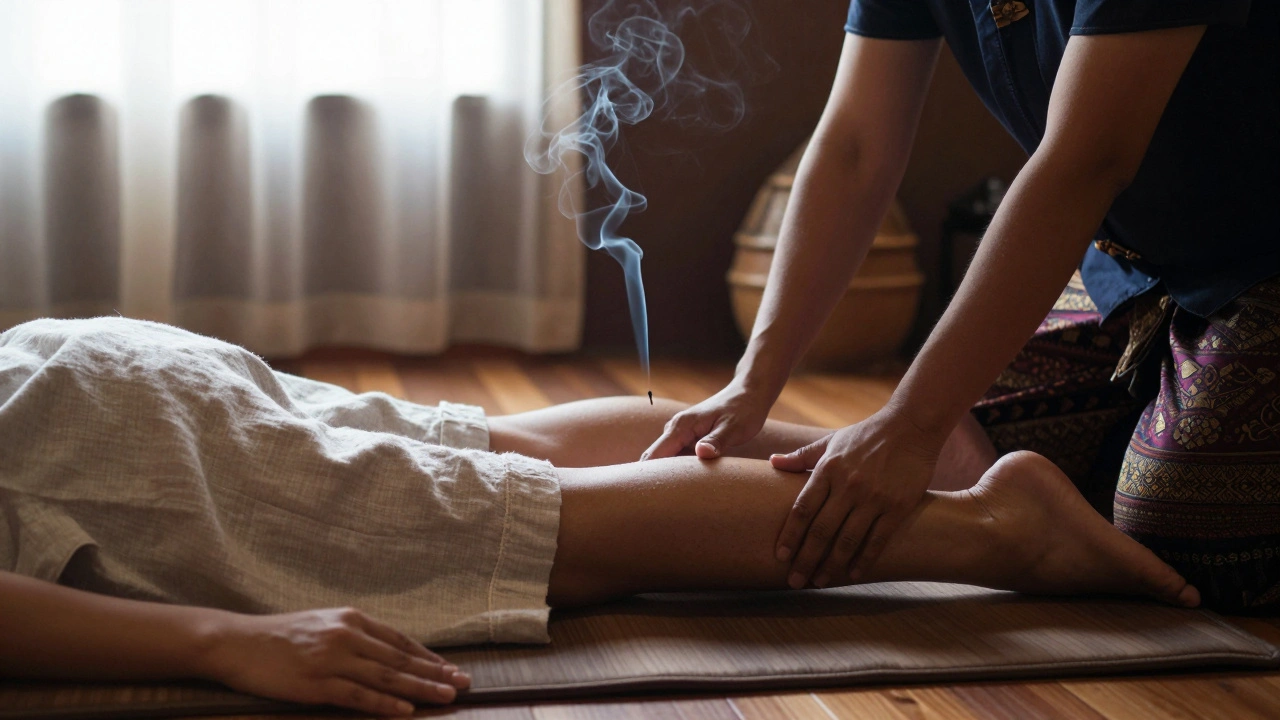
You’ve felt it before-the moment your body finally lets go. Your shoulders drop. Your breath slows. Your thoughts quiet. That’s not just relaxation. That’s something deeper. In Thai massage, that moment isn’t an accident. It’s the point of the whole thing.
What Makes Thai Massage Different?
Most massages focus on muscles. Thai massage works on energy. It’s not just about kneading knots-it’s about clearing blockages in the body’s invisible pathways. These pathways are called sen lines, and they’re the foundation of traditional Thai healing. Think of them like rivers of life energy. When they’re clogged, you feel stiff, tired, or emotionally heavy. When they flow, everything feels lighter.
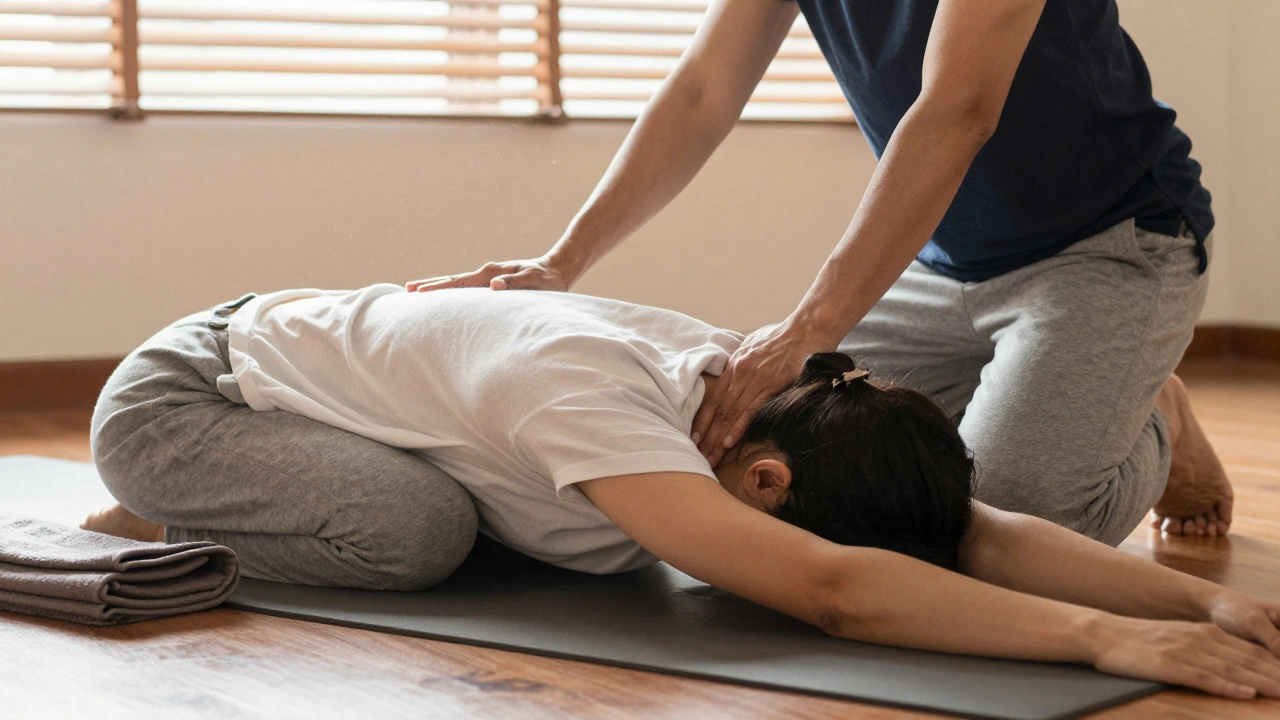
Unlike Swedish or deep tissue, Thai massage doesn’t rely on oils or tables. You stay fully clothed. The therapist uses their hands, feet, elbows, and knees to guide you through stretches, compressions, and rhythmic pressure. It’s yoga meets massage. You’re moved, not just touched. And that movement? It’s designed to wake up your body’s natural healing rhythm.
The Spiritual Roots You Can’t Ignore
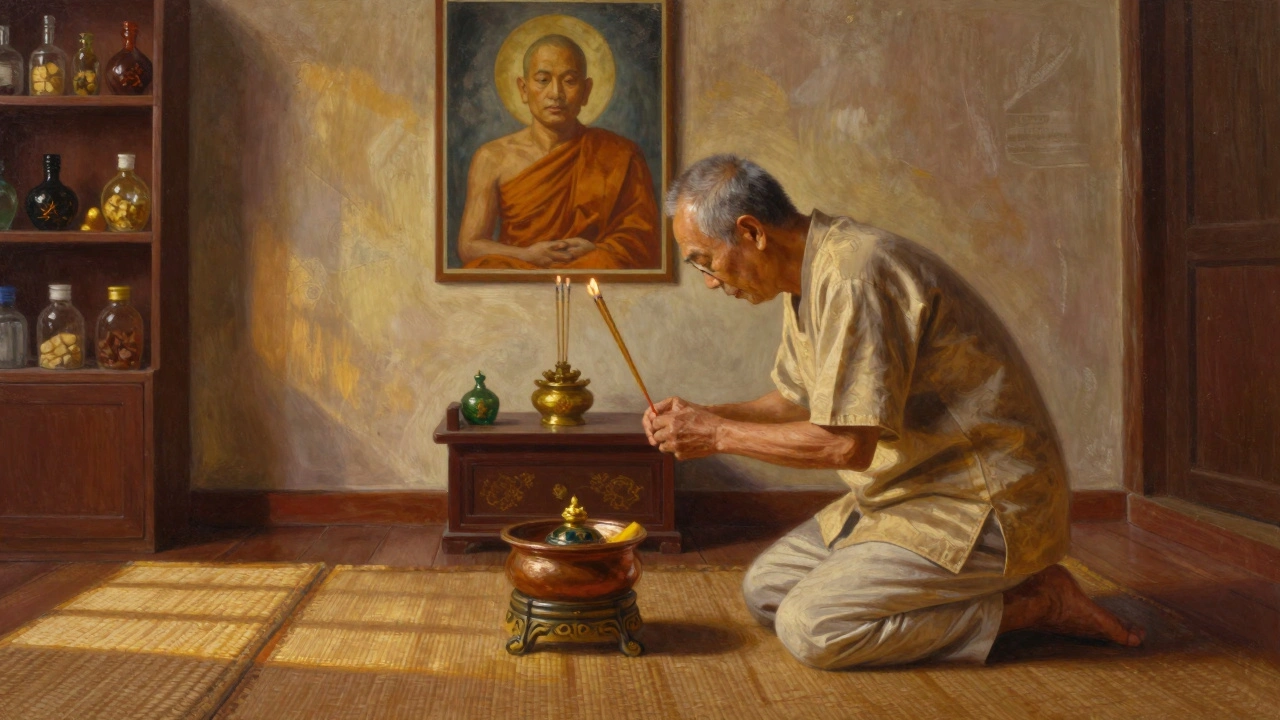
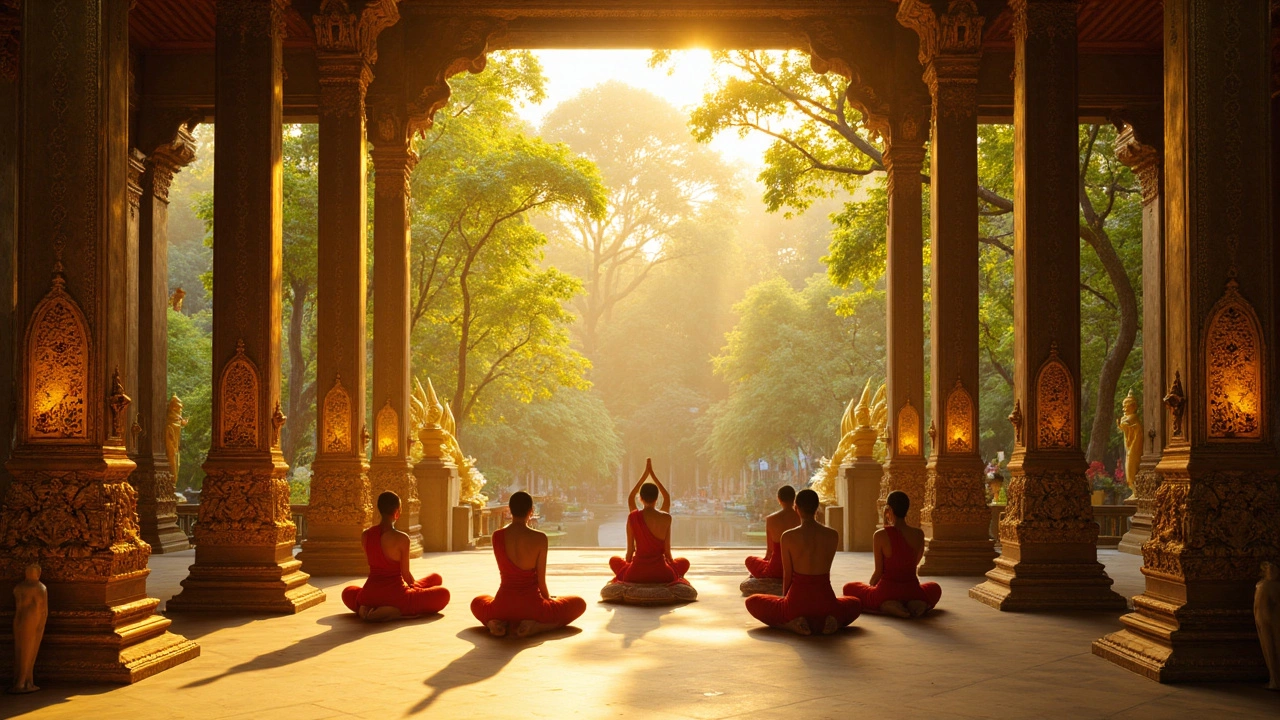
Thai massage didn’t start as a spa trend. It was born in temples. Over 2,500 years ago, Buddhist monks in Thailand developed it as a form of healing and meditation. They didn’t just want to relieve back pain-they wanted to help people find peace. The practice was passed down like a sacred tradition, not a commercial service.
Before a session begins, many Thai therapists still bow to their teacher’s image, light incense, or say a quiet prayer. This isn’t theater. It’s intention. The therapist isn’t just performing a technique-they’re holding space for your healing. That energy matters. You feel it. The difference between a mechanical session and a spiritual one? It’s like the difference between eating a meal and sharing a meal with someone who truly cares.
How It Connects Mind and Body
Modern science calls it the mind-body connection. Thai massage has been doing it for centuries. When pressure is applied along the sen lines, it doesn’t just loosen muscles-it triggers the parasympathetic nervous system. That’s your body’s ‘rest and digest’ mode. Your heart rate drops. Cortisol (the stress hormone) decreases. Your brain starts releasing endorphins.
But here’s what science doesn’t always explain: why, after a session, you suddenly remember a memory you hadn’t thought of in years. Or why you cry without knowing why. Or why you feel calmer for days afterward. That’s the spiritual layer. Thai massage doesn’t just release physical tension-it releases emotional baggage stored in your body. Trauma, anxiety, grief-they don’t live in your thoughts. They live in your hips, your shoulders, your jaw.
One client in Brighton told me she came for back pain after her divorce. She left crying-not from pain, but from relief. ‘I didn’t realize I was holding onto him in my spine,’ she said. That’s not coincidence. That’s energy moving.
What Happens During a Session?
You lie on a mat on the floor, wearing loose clothes. No music, no candles-just quiet. The therapist starts at your feet, working slowly up your legs, then your back, arms, and neck. They use rhythmic rocking, deep stretches, and firm pressure. You might feel a little discomfort, but never sharp pain. It’s the kind of ‘good hurt’ that feels like release.
At one point, they might gently press your chest and hold. You’ll breathe. And in that stillness, you’ll notice something: your thoughts aren’t racing. For the first time in weeks, maybe months, your mind is quiet. That’s the magic. It’s not about what they’re doing to you-it’s about what you’re letting go of.
Most sessions last 60 to 90 minutes. No rush. No clock ticking. You’re not being serviced-you’re being guided back to yourself.
Where to Find Authentic Thai Massage in the UK
Not every place called ‘Thai massage’ is true to the tradition. Some are just Swedish with a Thai name. To find the real thing, look for therapists trained in Thailand, especially those who studied at Wat Pho in Bangkok-the spiritual home of Thai massage.
In Brighton, there are a few studios where therapists have trained for months, sometimes years, in Chiang Mai or Bangkok. Ask if they learned from a lineage. Ask if they still honor the tradition with prayer or ritual. If they look confused, walk away. Authentic practitioners don’t just know the moves-they carry the intention.
Check reviews that mention ‘spiritual,’ ‘healing,’ or ‘transformative.’ Avoid places that advertise ‘happy endings’ or ‘sensual’-those are distractions from the real work.
What to Expect: Cost and Booking
A 60-minute session in Brighton typically costs between £55 and £85. Longer sessions (90 minutes) are £90-£120. That might seem steep, but consider this: you’re not paying for a massage. You’re paying for a reset. For a few hours of peace in a world that never stops demanding.
Book ahead. Good therapists aren’t always available. Many take only 3-4 clients a day to preserve their energy. That’s not a business model-it’s a spiritual practice.
Most places require you to arrive 10 minutes early. Use that time to sit quietly. Breathe. Let go of your to-do list. This isn’t a spa appointment. It’s a ritual.
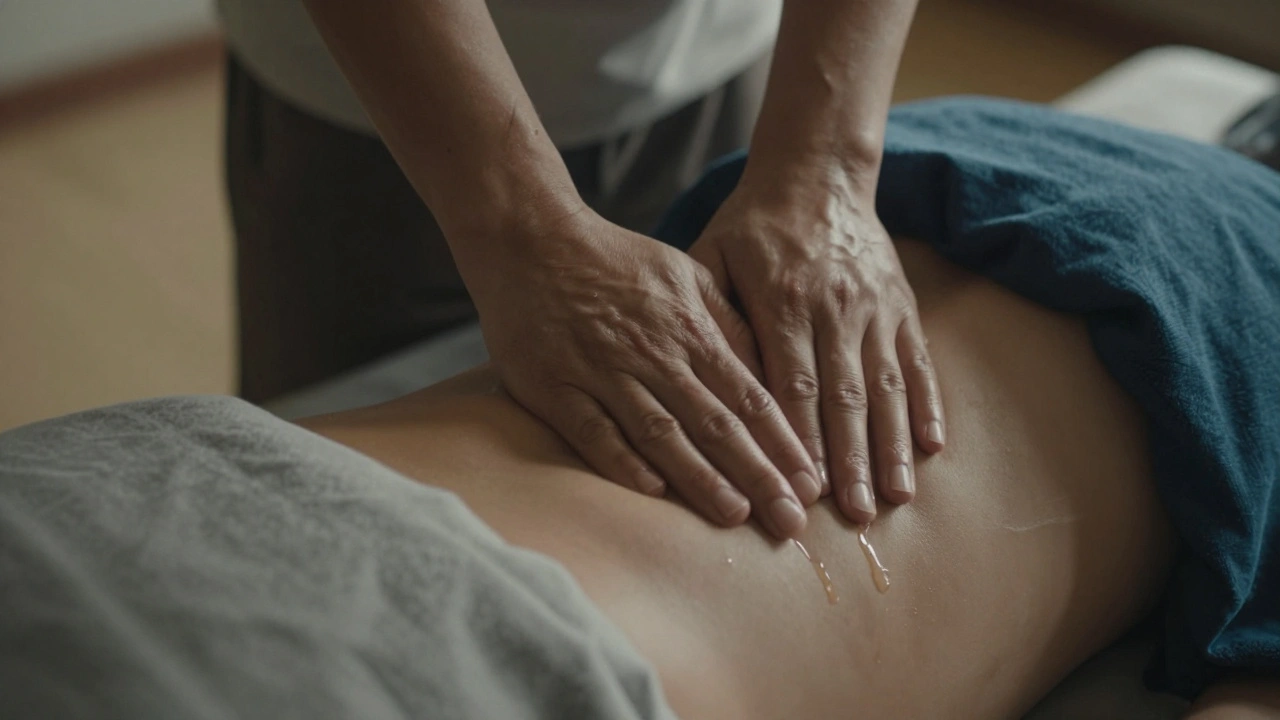
Thai Massage vs. Swedish Massage: The Real Difference
| Aspect | Thai Massage | Swedish Massage |
|---|---|---|
| Focus | Energy flow, sen lines, mind-body connection | Muscle relaxation, circulation |
| Position | On floor, fully clothed | On table, unclothed under sheet |
| Technique | Stretching, compression, rhythmic pressure | Gliding, kneading, tapping |
| Tools | Therapist’s body (hands, feet, elbows) | Hands, oils |
| Duration | 60-90 minutes | 60 minutes |
| After Effects | Emotional release, deep calm, clarity | Physical relaxation, temporary relief |
| Spiritual Element | Strong-rooted in Buddhist healing traditions | None |
Safety and What to Watch For
Thai massage is safe for most people. But if you have osteoporosis, recent injuries, or are pregnant, tell your therapist. They’ll adjust the pressure or skip certain stretches.
Never feel pressured to do more than you’re comfortable with. You’re in control. If something hurts too much, say so. A good therapist will pause, listen, and adjust. That’s part of the healing.
After your session, drink water. Your body is releasing toxins. Avoid caffeine or alcohol for a few hours. Give yourself space to feel. Don’t jump straight back into emails or chores. Let the calm settle.
Why This Matters Now More Than Ever
We live in a world that never stops. Phones ping. Work emails arrive at midnight. Social media screams for attention. We’re tired-not just physically, but spiritually. We’ve forgotten how to just be.
Thai massage doesn’t offer escape. It offers return. Return to your breath. Return to your body. Return to stillness. It’s not about fixing you. It’s about reminding you that you’re already whole.
If you’ve tried everything-meditation apps, yoga classes, journaling-and still feel disconnected, this might be the missing piece. Not because it’s magic. But because it’s ancient. And sometimes, the oldest truths are the ones we need the most.
Is Thai massage spiritual or just physical?
It’s both. While it physically stretches and releases tension, its roots are deeply spiritual. The practice was developed by Buddhist monks as a form of healing meditation. The therapist’s intention, the quiet space, and the focus on energy flow all contribute to a deeply spiritual experience-even if you don’t identify as religious.
Do I need to be flexible for Thai massage?
No. Thai massage is adapted to your body, not the other way around. Therapists work with your current range of motion. You’ll be guided gently into stretches. If something feels too intense, just say so. Flexibility improves over time, but it’s not a requirement to start.
Can Thai massage help with anxiety?
Yes. Many people report reduced anxiety after sessions. The rhythmic pressure and deep stretches activate the parasympathetic nervous system, which lowers stress hormones. Beyond that, the quiet, mindful space of the session gives your mind a break from constant thinking-something anxiety often feeds on.
Why do I feel emotional after a Thai massage?
Emotions stored in the body-grief, fear, unresolved stress-can surface during deep physical release. Thai massage works on areas where tension is held emotionally, like the hips and chest. Crying, laughing, or feeling suddenly calm afterward is normal. It’s not weakness. It’s healing.
How often should I get Thai massage?
Once a month is ideal for most people to maintain balance. If you’re dealing with high stress or chronic tension, once every two weeks can help. But don’t treat it like a chore. Listen to your body. Sometimes, you’ll need it more. Other times, you’ll feel fine for weeks. That’s okay.
Ready to reconnect? Find a quiet studio. Lie down. Breathe. Let go. You don’t need to believe in energy lines to feel their effect. Just show up-and let your body remember what peace feels like.


Naomi Dietrich
January 2, 2026 AT 13:43This isn't massage-it's emotional archaeology. I cried for 20 minutes after my first session and didn't even know I was holding onto my dad's death. They don't just touch your body-they crack open your soul and say, 'Here, take it back.'
And if you think that's woo-woo, try it. Then come back and tell me it's just stretching.
brandon garcia
January 4, 2026 AT 01:35YOOOO. This is the most beautiful thing I’ve read all year. Thai massage isn’t a service-it’s a sacred reset button for a broken world. I went in with sciatica and came out with my childhood memories floating like leaves on a river. The therapist didn’t say a word. Just pressed. And I wept. Not because it hurt. Because it remembered me.
Stop scrolling. Book it. Your soul is begging for this.
Joe Bailey
January 5, 2026 AT 21:16Okay, I’ll admit-I went in skeptical. But the way the therapist moved me through those stretches… it wasn’t just physical. There was a rhythm. A cadence. Like my body was being tuned like an instrument.
And the silence? No music, no chattering. Just breath. That’s the real therapy. Not the pressure. Not the sen lines. The stillness. We’ve forgotten how to be still. This forces it on you. And it’s terrifying. And necessary.
danny henzani
January 6, 2026 AT 17:33LMAO so now we’re giving spiritual cred to some ancient thai ritual? Next they’ll say yoga is magic and acupuncture is witchcraft. This is just fancy stretching with incense and a side of cultural appropriation. I’ve had better releases from a foam roller and a whiskey.
Also, who lets a stranger press their knees into my chest? Sounds like a cult. Or a scam. Either way, I’m not paying $120 to cry in a room with someone who bows to a statue.
Tejas Kalsait
January 8, 2026 AT 10:27The sen lines are not metaphorical-they are anatomical correlates of fascial planes and neural pathways, validated by recent myofascial research. The parasympathetic activation is measurable. The emotional release? That’s somatic memory encoded in proprioceptive tissue. The spiritual framing is cultural packaging for a neurobiological phenomenon.
But the packaging matters. Ritual induces placebo with therapeutic efficacy. So yes-it works. Even if you don’t believe in it.
Still, the monk lineage? Overstated. Most modern practitioners are trained in vocational schools. Not temples.
Emily Martin
January 9, 2026 AT 09:43I’ve had three sessions. Each time, I felt lighter-not just physically, but mentally. I didn’t cry, but I did sit in my car for 15 minutes after the last one, just breathing. No music. No phone. Just me. That’s rare.
And I appreciate how the author didn’t oversell it. No ‘healing crystals’ or ‘chakra alignment.’ Just honest, grounded language. This is what real holistic care looks like: simple, respectful, and deeply human.
Grace Nean
January 9, 2026 AT 12:04To anyone feeling hesitant-just try it once. No pressure to believe in energy lines. Just show up. Wear loose clothes. Breathe. Let the therapist move you. You don’t have to understand it to feel it.
I used to think I was too stiff, too anxious, too ‘not spiritual enough’ for this. Turns out, that’s exactly why I needed it. You don’t have to be enlightened to benefit from stillness. You just have to be willing to stop fighting for five minutes.
aidan bottenberg
January 10, 2026 AT 06:50While the article presents a compelling narrative, I would encourage readers to critically evaluate the scientific literature surrounding Thai massage. The parasympathetic response is well-documented, but claims regarding ‘emotional baggage stored in the hips’ lack empirical validation. The cultural context is valuable, but should not be conflated with clinical efficacy.
That said, if the practice provides subjective relief and improved well-being, it holds therapeutic merit regardless of metaphysical assumptions.
mahesh moravaneni
January 11, 2026 AT 13:35