
You’ve heard whispers about yoni massage-maybe in a wellness blog, a friend’s quiet recommendation, or a tantra workshop that felt too intimate to ask about. But what if it’s not about sex? What if it’s about yoni massage as a sacred act of self-care, a way to release tension stored in the body for years, and reconnect with a part of yourself you’ve been taught to ignore?
Let’s be clear: this isn’t about arousal. It’s about restoration. It’s about learning to hold space for your own softness. And yes, it’s completely possible-even powerful-to do this alone, or with a trusted partner, without any erotic agenda.
What Is Yoni Massage, Really?
The word "yoni" comes from Sanskrit and means "sacred space" or "source." In tantric traditions, it’s not just a physical term-it’s a symbol of feminine energy, creativity, and life force. A yoni massage is a gentle, intentional touch practice focused on the vulva and surrounding areas. It’s not penetration. It’s not about orgasm. It’s about presence.
Think of it like a full-body massage, but centered on the pelvic region. The goal isn’t to "fix" anything. It’s to listen. To notice sensations you’ve learned to numb-tightness, numbness, shame, or even just the quiet hum of disconnection.
Women who’ve tried it describe it as "feeling alive for the first time in years." One client in Brighton told me she cried during her first session-not from pain, but because she hadn’t felt safe in her own body since her teens. That’s the power of this practice.
Why Try Yoni Massage? The Real Benefits
Here’s what actually changes when you start practicing yoni massage regularly:
- Reduces pelvic floor tension-Many women carry chronic tightness here from stress, childbirth, or trauma. Gentle touch helps release it naturally.
- Improves body awareness-You start noticing subtle shifts: warmth, tingling, pulsing. These aren’t "signs"-they’re signals your body’s been sending for years.
- Heals emotional blockages-Shame, guilt, or past trauma often live in the pelvic area. Touch, when done with care, can help soften those walls.
- Enhances intimacy-When you learn to receive touch without performance pressure, it transforms how you connect with partners.
- Boosts natural lubrication and sensitivity-Not because you’re turned on, but because blood flow increases and nerves become more responsive.
There’s no magic pill here. Just consistent, mindful attention. One woman in her 50s started doing 10-minute yoni massages after her menopause diagnosis. Within weeks, she said her dryness improved-and more importantly, she stopped feeling like her body was "broken."
How to Do a Yoni Massage: A Simple Step-by-Step Guide
You don’t need a therapist to begin. You can start today, alone, in your own space.
- Set the mood-Light a candle. Play soft music. Turn off your phone. This isn’t a chore-it’s a ritual.
- Wash your hands-Use warm water and gentle soap. Dry them completely.
- Apply oil-Use a natural, unscented oil like coconut, jojoba, or almond. Warm it between your palms first.
- Start outside-Gently stroke the outer lips (labia majora). Use the pads of your fingers, not your nails. Move slowly. Breathe.
- Move inward-When you’re ready, let your fingers rest lightly on the inner lips (labia minora). Don’t press. Just hold. Notice if your breath changes.
- Explore the clitoris-It’s not a button to press. Use the lightest touch. Circle it. Glide over it. Let your fingers move like a breeze.
- Pause and breathe-If you feel tension, don’t push. Just stay there. Breathe into it. Let your body decide what happens next.
- End with gratitude-Place your hand gently over your lower belly. Say thank you-out loud, if you can. This isn’t just touch. It’s devotion.
Do this for 10-15 minutes, 2-3 times a week. Don’t aim for orgasm. Don’t aim for anything. Just be.
Yoni Massage vs. Sensual Massage: What’s the Difference?
People often confuse yoni massage with sensual or erotic massage. Here’s how they’re different:
| Aspect | Yoni Massage | Sensual Massage |
|---|---|---|
| Purpose | Healing, awareness, relaxation | Pleasure, arousal, erotic stimulation |
| Focus | Internal sensations, emotional release | External stimulation, climax |
| Touch Style | Light, slow, non-goal-oriented | Firm, rhythmic, intentional |
| Outcome | Inner calm, body trust, reduced tension | Physical arousal, sexual release |
| Typical Setting | Private, quiet, self-guided or therapeutic | Spa, adult service, partner-led |
Yoni massage doesn’t require a partner. Sensual massage often does-and it’s designed to lead to sex. Yoni massage is about returning home to yourself.
What to Expect During a Professional Session
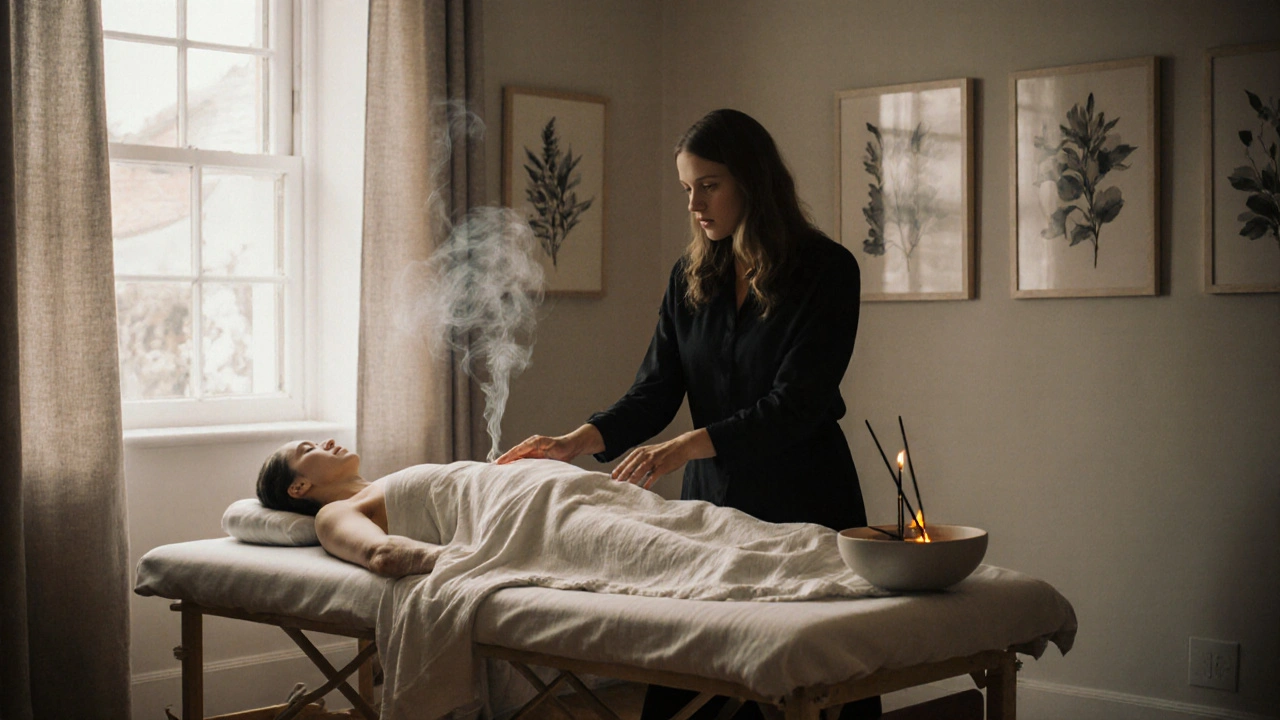
If you choose to work with a trained practitioner-especially in Brighton, where holistic wellness is growing-you’ll likely be guided through a safe, structured experience.
First, there’s a conversation. No touch until you’ve shared what you’re feeling, what you hope for, and what boundaries you have. This isn’t a quick service. It’s a session that can last 60-90 minutes.
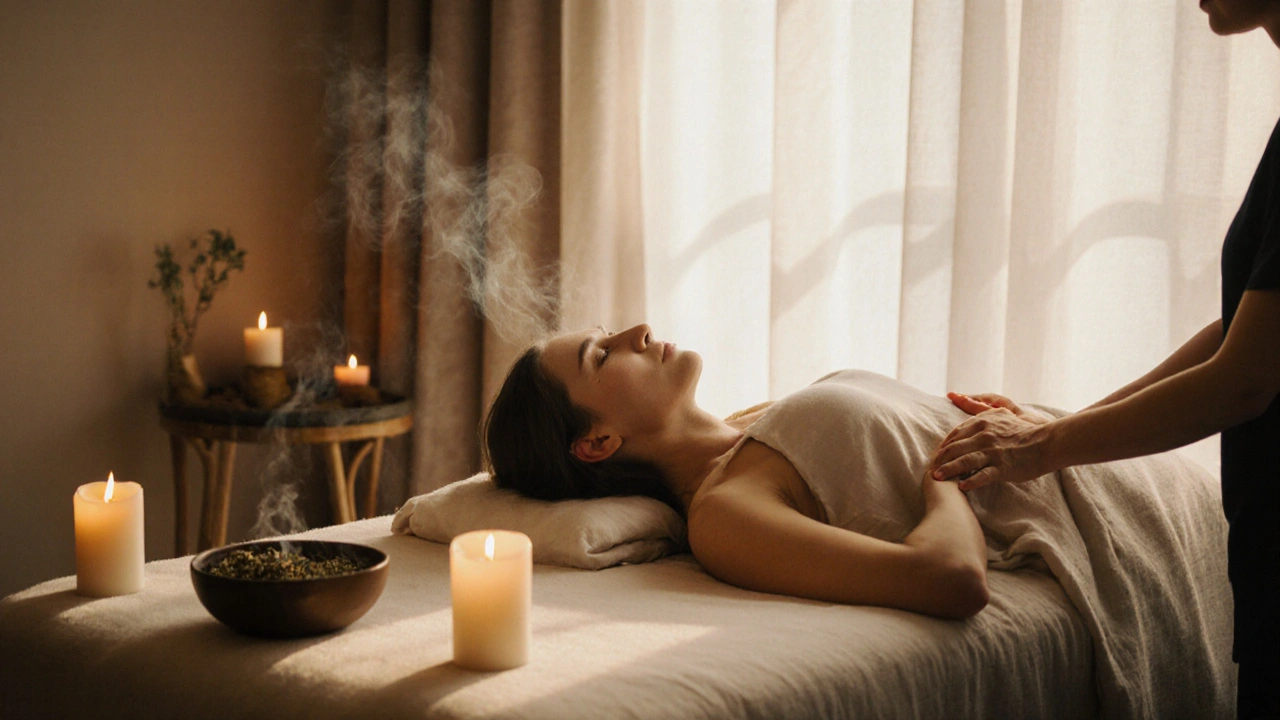
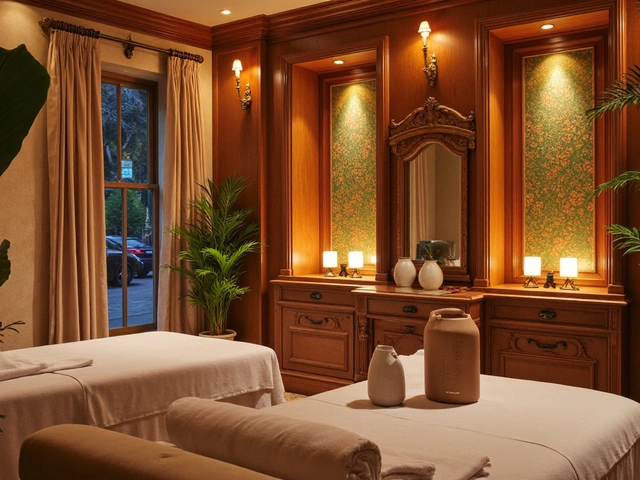
The practitioner will use warm oil, soft music, and dim lighting. They’ll begin with full-body massage to help you relax. Only when you’re fully at ease will they move to the pelvic area-with clear consent at every step.
You might feel emotions surface. Tears. Laughter. Silence. All of it’s normal. A good practitioner won’t rush you. They’ll hold space.
And no-there’s no sexual activity. No penetration. No "happy ending." If someone offers that, walk away. True yoni massage is about healing, not transaction.
Where to Find Trusted Practitioners in Brighton
Brighton has a strong community of holistic healers who specialize in somatic therapy and tantric practices. Look for practitioners who:
- Have training in pelvic floor therapy, somatic experiencing, or tantra
- Offer a pre-session consultation
- Clearly state their boundaries and ethics
- Don’t use terms like "erotic" or "adult" in their service descriptions
Some trusted names in the area include Stillpoint Wellness and Root & Bloom Holistics. Both offer yoni massage as part of a broader trauma-informed care approach. Always check reviews and ask about their qualifications.
Don’t book based on Instagram aesthetics. Look for depth. Look for safety.

Safety First: Essential Guidelines
Yoni massage is powerful-but only if done with care.
- Never force anything. If it hurts, stop. If you feel shame, pause. This isn’t about pushing through discomfort.
- Use only natural oils. Avoid scented lotions, petroleum jelly, or anything with chemicals. Your vulva is sensitive.
- Wash hands and tools. Always. Even if you’re doing it alone.
- Don’t do it if you’re in pain. If you have an infection, open sores, or recent surgery, wait until you’re healed.
- Set boundaries. You have the right to say "no" at any moment-even if you’ve paid for a session.
- Don’t confuse this with sex work. Legitimate yoni massage is therapeutic. If it feels transactional, it’s not the real thing.
Frequently Asked Questions
Is yoni massage only for women?
While the term "yoni" refers to the female genitalia, the principles of intentional, non-goal-oriented touch can be adapted for anyone with a vulva-including trans women and non-binary individuals. Men can practice similar techniques on their own bodies, often called "lingam massage," but yoni massage specifically refers to the feminine anatomy.
Can I do yoni massage with my partner?
Yes-but only if both people are fully on board, with zero pressure to perform or respond a certain way. Many couples use it as a way to rebuild intimacy after trauma, childbirth, or emotional distance. Start with one person touching their own body first, then invite the partner to join only when they feel ready.
Will I orgasm during a yoni massage?
Sometimes. Sometimes not. That’s not the point. If you’re trying to reach orgasm, you’re doing something else. Yoni massage is about feeling-not achieving. Letting go of the goal often leads to deeper pleasure than any orgasm ever could.
How often should I do yoni massage?
Start with once a week. Even 10 minutes can make a difference. As you become more comfortable, you might do it daily as part of your self-care routine. Think of it like brushing your teeth-but for your emotional and physical well-being.
Is yoni massage legal in the UK?
Yes, absolutely-as long as it’s performed by a trained therapist in a therapeutic context, without sexual activity or payment for sex. In the UK, sexual services are illegal, but therapeutic touch is protected under holistic health practices. Always confirm the practitioner’s credentials and ethics before booking.
Ready to Begin?
You don’t need permission to heal. You don’t need a certificate. You don’t need to be "ready." You just need to show up-for yourself, in a quiet room, with oil on your fingers, and the courage to be gentle.
Yoni massage isn’t a trend. It’s a return. A return to the body you were born with-the one that deserves to be held, not fixed. The one that’s been waiting for you to finally listen.
Start small. Start slow. Start today.





Emily Martin
November 14, 2025 AT 09:41This is one of the most thoughtful, well-researched pieces I’ve read on embodied healing. The distinction between yoni massage and sensual massage is crucial-so many people conflate them, and that undermines the therapeutic intent. I’ve been practicing this for two years now, and the shift in my pelvic floor tension alone has been life-changing. No drugs, no surgery, just consistent, gentle presence.
Also, the emphasis on natural oils? Perfect. I use cold-pressed jojoba with a drop of lavender, and it’s like my skin sighs in relief. No chemical irritation, no dryness. Just softness.
Thank you for writing this without sensationalism. It deserves to be shared widely.
Grace Nean
November 14, 2025 AT 23:57I’m a 52-year-old mom of three, and I started this after my divorce. I didn’t even know where to begin-I felt like my body wasn’t mine anymore. But doing this alone, just 10 minutes before bed, helped me reconnect with a part of me I’d buried under years of caregiving and shame.
One night I cried because I realized I hadn’t touched myself with kindness since I was 16. That’s not about sex. That’s about survival. Thank you for normalizing this. I’m not broken. I’m just learning how to come home.
Gail Maceren
November 16, 2025 AT 18:08Just did my first session tonight. Light oil, candle, no music. Sat there for 12 minutes just breathing. Didn’t feel anything dramatic. Didn’t need to. Just… felt like I was there. Like I finally showed up for myself. Weirdly peaceful. I’ll do it again tomorrow.
Rahul Verma
November 18, 2025 AT 08:54Coming from India, I’ve never heard of this outside of tantric texts-but the way you framed it, it’s so simple. No mysticism. Just care. My sister had a traumatic birth and still avoids any pelvic exam. I’m going to share this with her. Quietly. No pressure. Just a gentle nudge toward self-compassion. Thank you for making it feel safe.
aidan bottenberg
November 20, 2025 AT 03:55While the intention behind this practice is laudable, I must raise a methodological concern: the absence of empirical data supporting the physiological claims. The assertion that yoni massage improves natural lubrication and reduces pelvic floor tension lacks peer-reviewed validation. While anecdotal evidence is compelling, it does not constitute scientific proof. Furthermore, the conflation of cultural terminology (e.g., Sanskrit-derived "yoni") with modern therapeutic practice risks cultural appropriation without proper contextual framing. A more rigorous approach would include references to somatic therapy literature or pelvic floor physiotherapy studies to substantiate these claims.
Jennifer Kettlewell
November 20, 2025 AT 15:42Let’s be real-this is just another corporate wellness scam repackaged as "spiritual healing." They’re selling you oil, candles, and false empowerment while ignoring the real issue: systemic trauma from patriarchy. And don’t get me started on "trusted practitioners"-how many of them are just ex-hippies with a LinkedIn profile? The UK legal disclaimer? That’s a loophole. They’re all one step away from being classified as sex workers. This is grooming disguised as self-care. Wake up.
And why is everyone so obsessed with the vulva? What about the prostate? The sacrum? Why is this only for women? Double standard. Always is.
AMock Media
November 22, 2025 AT 02:17Interesting. Very interesting. But I’ve been tracking the rise of "embodied feminine healing" in wellness circles since 2019-and there’s a pattern. First, the language of sacredness. Then, the soft lighting. Then, the oil. Then, the testimonials. Then-the paid retreats. Then-the influencers. Then-the data harvesting. Who owns the intellectual property of "yoni"? Who profits from these sessions? Who’s behind the certification programs? And why is Brighton suddenly the epicenter of this movement? Coincidence? Or a soft-power cultural operation disguised as therapy? The silence around funding sources is deafening.
John Galt
November 22, 2025 AT 19:08From a neurophysiological standpoint, the pelvic region is densely innervated by the sacral parasympathetic ganglia, which modulate autonomic tone, visceral sensation, and emotional regulation. Intentional, non-goal-oriented somatic stimulation-particularly when paired with breath regulation and environmental decoupling from digital stimuli-induces a measurable shift in heart rate variability (HRV), indicating enhanced vagal tone. This is not mysticism; it’s neurobiology. The placebo effect is real, but so is the neuroplastic response to embodied mindfulness. The fact that this practice bypasses cognitive narrative and accesses subcortical somatic memory is precisely why it’s so potent for trauma recovery. The literature on sensorimotor psychotherapy supports this. You’re not just touching skin-you’re rewiring survival responses.
mahesh moravaneni
November 23, 2025 AT 23:14