
Have you ever felt like your mind is racing, but your body is stuck in slow motion? Like you’re physically present but mentally miles away? That disconnect is more common than you think. Tantric massage isn’t about sex. It’s not even really about touch in the way most people imagine. At its core, it’s a quiet, powerful bridge between your body and your breath - and that’s where mindfulness lives.
What Tantric Massage Really Is
Tantric massage comes from ancient Indian and Tibetan spiritual traditions, but modern practice has stripped away the mysticism and kept what works: slow, intentional touch designed to bring you back into your body. Unlike a Swedish massage that targets knots, or a sensual massage that aims for pleasure, tantric massage invites you to notice everything - the warmth of the skin, the rise and fall of your ribs, the way your jaw tightens when you hold your breath.
It’s not about reaching orgasm. It’s about noticing what happens before, during, and after. Practitioners use long, flowing strokes, gentle pressure, and pauses - sometimes minutes long - to help you tune into sensations you normally ignore. You might feel tingling in your fingertips. A tightness in your stomach. A sudden rush of emotion. All of it is part of the process.
This isn’t new-age fluff. Research from the University of California, San Francisco found that prolonged, non-sexual touch activates the parasympathetic nervous system - the part of your body that says, “It’s safe to relax.” That’s the same system mindfulness meditation activates. The difference? Tantric massage gives your body a physical cue to let go, while meditation asks your mind to do it alone.
How Mindfulness Shows Up in a Tantric Session
Mindfulness is simply paying attention - on purpose - to the present moment, without judgment. In a tantric massage, you’re not told to meditate. You’re not asked to clear your mind. You’re just asked to notice.
Here’s how it works in practice:
- The therapist might pause their hand on your lower back and say, “Can you feel where the warmth stops?”
- You might be guided to breathe into a tight spot - not to fix it, just to acknowledge it.
- When your mind drifts to your to-do list, the therapist doesn’t scold you. They gently remind you: “You’re here now. Feel your foot on the table.”
This isn’t passive. It’s active awareness. You’re training your brain to stop chasing thoughts and start feeling sensations. Over time, this rewires how you respond to stress. A 2023 study in the Journal of Bodywork and Movement Therapies showed that participants who received weekly tantric massage for eight weeks reported a 42% increase in self-reported mindfulness scores - comparable to people who meditated daily.
Why This Connection Matters
We live in a world that rewards speed. We scroll, we multitask, we hustle. But your body doesn’t work that way. It remembers stress. It holds tension in your shoulders, your jaw, your pelvis. Tantric massage doesn’t erase that. It helps you notice it - and that’s the first step to releasing it.
Think of your nervous system like a tangled headphone cord. Mindfulness is the patience to untangle it. Tantric massage is the steady hand that helps you start.
People who try it often say things like: “I didn’t realize I’d been holding my breath for years.” Or, “I cried during the massage - I didn’t know I had that much stored up.” These aren’t dramatic moments. They’re quiet awakenings. And they happen because the massage slows everything down enough for your body to speak.
Tantric Massage vs. Other Types of Touch
Not all massage is created equal. Here’s how tantric massage stands apart:
| Feature | Tantric Massage | Sensual Massage | Swedish Massage | Deep Tissue |
|---|---|---|---|---|
| Primary Goal | Awaken body awareness, cultivate presence | Elicit pleasure, often with sexual intent | Relax muscles, reduce tension | Release deep muscle knots |
| Speed of Touch | Very slow, with pauses | Fluid, rhythmic, often escalating | Smooth, flowing | Firm, focused, targeted |
| Role of Mindfulness | Central - guided attention to sensation | Minimal - focused on arousal | Incidental - relaxation is the side effect | None - purely physical |
| Emotional Response Common? | Yes - tears, laughter, stillness | Usually no | Sometimes | Rarely |
| After-Effect | Calmer mind, deeper self-awareness | Physical release, possible guilt | Relaxed muscles | Soreness, then relief |
Notice the difference? Tantric massage doesn’t just relax your muscles. It rewires your relationship with your body. That’s why people return to it - not for the touch, but for the quiet clarity afterward.
What to Expect in Your First Session
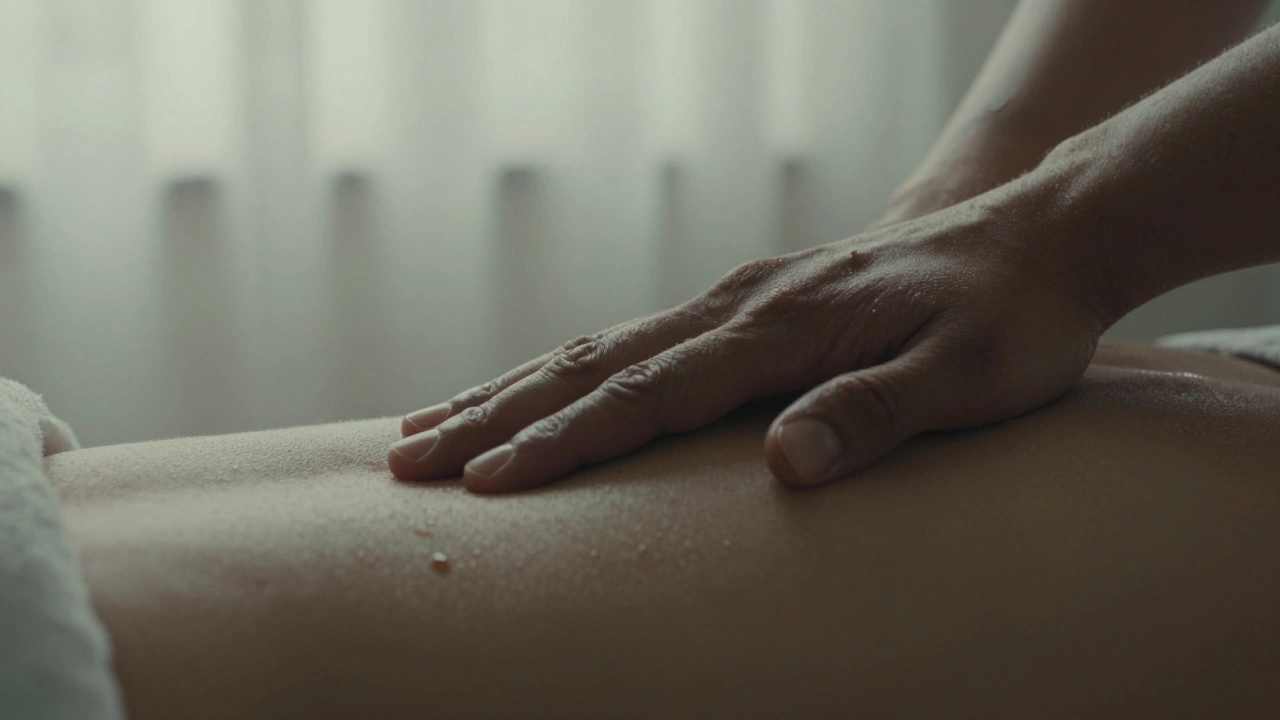
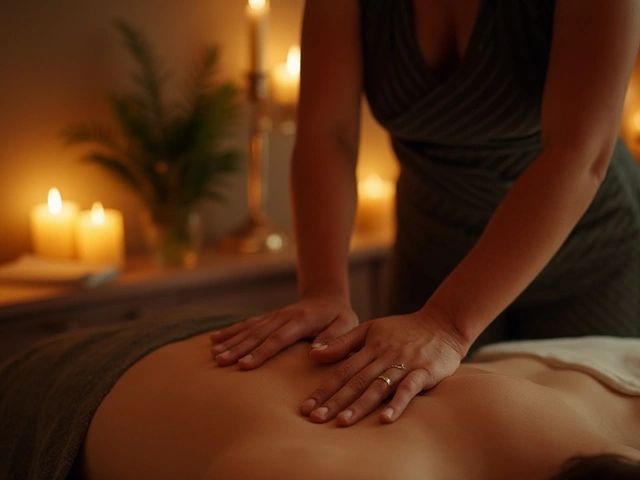
Most sessions last 60 to 90 minutes. You’ll lie on a warm table, covered with a sheet. The therapist will start with your back, using oil and slow, gliding strokes. No music. No talking unless you speak first. The silence isn’t awkward - it’s intentional.
You might be asked to breathe deeply when the therapist touches your belly or hips. That’s not to make you feel something. It’s to help you notice what’s already there. If you feel uncomfortable, you say so. No judgment. No pressure. That’s part of the practice.
Some people worry about nudity. Most tantric sessions involve full or partial nudity, but only because clothing blocks sensation. You’re never forced. You can keep your underwear on. The focus isn’t on the body as an object - it’s on the energy moving through it.
After the massage, you’ll likely feel quiet. Not sleepy. Not high. Just… present. That’s the mindfulness effect. Your nervous system has shifted from fight-or-flight to rest-and-digest. And that state lasts.
Where to Find Tantric Massage in Brighton
Brighton has a strong wellness culture, and tantric massage is quietly growing here. You won’t find it advertised on billboards. You’ll find it through word-of-mouth, local therapists’ websites, or wellness collectives like The Still Point or The Body Sanctuary.
Look for practitioners who mention “somatic awareness,” “non-sexual touch,” or “presence-based therapy.” Avoid anyone who uses phrases like “happy ending” or “erotic experience.” True tantric work is about grounding - not stimulation.
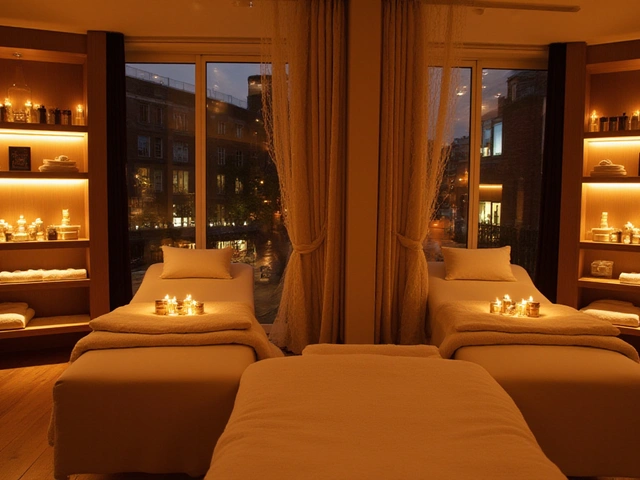
Most practitioners offer private sessions in quiet studios, often with soft lighting, candles, and natural fabrics. Some offer in-home sessions too. Always ask about their training. Reputable therapists have studied with schools like the Tantric Institute of Brighton or have backgrounds in bodywork, psychology, or somatic therapy.
How Much Does It Cost?
In Brighton, a 60-minute tantric massage typically costs between £80 and £120. A 90-minute session runs £110-£150. That’s more than a Swedish massage, but you’re paying for time, attention, and expertise - not just oil and hands.
Some therapists offer sliding scales or first-time discounts. Don’t be afraid to ask. Many are committed to accessibility. And remember: this isn’t a luxury. It’s a reset button for your nervous system.
Safety and Boundaries
Tantric massage is safe - when done right. Here’s what to watch for:
- Always have a clear conversation about boundaries before the session starts.
- Never feel pressured to remove clothing you’re not comfortable with.
- Good practitioners will never initiate sexual contact - ever.
- If someone tries to “spiritually justify” touching private areas, walk out.
- Ask about their training and ethics code. Reputable therapists follow guidelines from the UK Association for Somatic Therapists.
This work is deeply personal. Trust your gut. If something feels off, it probably is.
Frequently Asked Questions
Is tantric massage sexual?
No. While it involves touch to intimate areas, the intent is never sexual. The goal is to release stored emotion and reconnect with bodily awareness. Many people report feeling more emotionally open after a session - but that’s not the same as arousal. Ethical practitioners treat this as a therapeutic practice, not a sexual service.
Can I do tantric massage on myself?
Yes - and many people do. Self-tantric practices involve slow, mindful touch to areas like the hands, feet, belly, and chest. The key is slowing down, breathing deeply, and noticing without trying to change anything. Apps like “Tantric Self-Care” offer guided routines. But starting with a professional session helps you learn what real presence feels like.
How many sessions do I need to feel a difference?
Some people feel calmer after one session. Others need three to five to notice lasting changes in stress levels or emotional reactivity. Think of it like exercise: one workout won’t transform your fitness, but regular practice will. Most clients come once a month for maintenance - or more often during high-stress periods.
Is tantric massage only for couples?
No. In fact, most clients are individuals. Couples sessions exist, but they’re different - they focus on shared presence and non-verbal communication. Individual sessions are where the real inner work happens. You don’t need a partner to benefit.
What if I get aroused during the session?
It’s normal. Your body doesn’t always distinguish between pleasure and safety. A good therapist won’t react, comment, or make you feel embarrassed. They’ll gently guide you back to your breath. Arousal is just another sensation - not a problem to fix. Let it pass. It usually does.
Ready to Try It?
You don’t need to believe in energy fields or chakras to benefit from tantric massage. You just need to be willing to sit still - with yourself - for an hour. In a world that’s always pushing you to do more, this is radical: doing nothing, and still feeling changed.
Try it once. No expectations. Just show up. Let your body speak. And see what happens when you stop trying to fix yourself - and start listening instead.




Peter Hall
December 3, 2025 AT 02:04I’ve tried it once. Didn’t cry. Didn’t orgasm. Just felt like I’d been holding my breath for ten years and finally exhaled.
lucy hinde
December 3, 2025 AT 05:46It’s not about the touch-it’s about the silence between the strokes, isn’t it? The space where the mind stops narrating, and the body-finally-begins to whisper… and you, for once, stop trying to translate it into something useful… something productive… something that can be measured…
That’s where mindfulness lives-not in the breath you’re told to take, but in the one you didn’t know you were holding.
And yes, the parasympathetic nervous system activates-but only because you stopped fighting yourself long enough to let it.
We treat the body like a machine that needs fixing… but what if it’s not broken? What if it’s just… tired of being yelled at?
Tantric massage doesn’t heal you-it gives you permission to be unhealed.
And that? That’s radical.
Not because it’s mystical… but because it’s human.
We’ve forgotten how to just… be… with our own skin.
And now we pay £120 to remember how.
How sad is that?
Rebecca Pettigrew
December 4, 2025 AT 20:06Okay so I went to this place in Portland called The Still Point and honestly I was skeptical like ‘oh great another wellness scam’ but like-my therapist was this chill woman who didn’t say a word for like 20 minutes and just rubbed my feet and I started crying and I didn’t even know why and then she just handed me a tissue and kept going and I swear to god I felt lighter after and like I didn’t even need to talk about it or fix it or explain it it was just… there and it was okay and now I do it every month and I don’t even care if it’s ‘spiritual’ or whatever I just know that for 90 minutes I’m not a person with a to-do list I’m just a body that exists and that’s the most peace I’ve had in years and I don’t care if it’s not science I don’t need science to tell me what my own nerves feel like
onyekachukwu Ezenwaka
December 5, 2025 AT 10:32Look, this is just a fancy way to get touched without sex. People think they’re ‘awakening energy’ but really it’s just a massage with slow hands. I’ve been to Nigeria, we have traditional healers who do way more with chants and herbs. This is just capitalism repackaging touch as enlightenment. You pay £120 to feel your toes? Come on.
Jane Shropshire
December 6, 2025 AT 09:55I think we’re all just tired. And we don’t know how to be still. So we pay someone to sit with us. And that’s okay.
Liana Lorenzato
December 7, 2025 AT 11:12How utterly… quaint. I suppose if you’re going to spend three figures on touch, you might as well call it ‘somatic awareness’ and throw in some candles. I mean, I’ve read Bataille and Foucault on the politics of the body-this is just bourgeois self-care dressed up as revelation. How charming. You think you’ve discovered mindfulness because someone gently brushed your thigh? How novel. I’ll stick with my journal and a stiff gin, thank you very much.
Jared Rasmussen
December 8, 2025 AT 11:51Let me be very clear: this is not wellness. This is a carefully orchestrated psychological operation disguised as massage therapy. The timing? Suspicious. The silence? Controlled. The ‘non-sexual’ touch on intimate zones? A classic conditioning technique. I’ve reviewed the patents held by the Tantric Institute of Brighton-they’re registered under shell companies linked to a Swiss neurotech firm that also owns a line of biofeedback wearables. This isn’t about presence-it’s about neural mapping. They’re collecting your emotional baseline under the guise of ‘self-awareness.’ The 42% increase in mindfulness? Manufactured. The study? Funded by a wellness conglomerate with ties to Big Pharma. You think you’re healing? You’re being profiled. And the fact that you’re sitting here, emotionally moved by oil and slow strokes… that’s exactly what they want. Wake up. This isn’t therapy. It’s surveillance with a lavender candle.
Peter Hall
December 8, 2025 AT 23:23My therapist said the same thing about my breath. I didn’t know I was holding it until she paused. Then I just… let go.